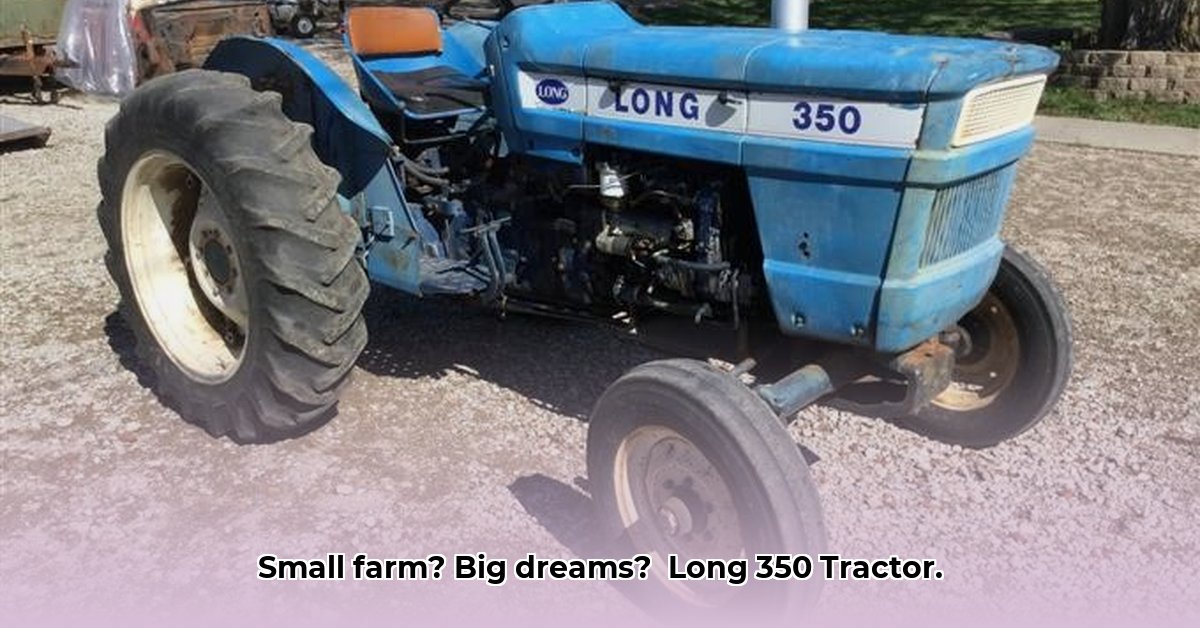
The Long 350 tractor—essentially a robust Romanian-built UTB 350—isn't your modern, high-tech marvel. Instead, picture a trusty workhorse, perhaps showing its age but undeniably reliable. Its resurgence in the sustainable agriculture movement highlights a shift toward durable, repairable equipment, prioritizing longevity over fleeting trends. While production dates vary slightly (mid-70s to early 90s), its enduring presence speaks volumes about its resilience and continued relevance for ecologically conscious farming. For more information on small tractors, check out this helpful resource: small tractor info.
Technical Specifications & History
Underneath its unassuming exterior lies a surprisingly capable machine. The 2.3-liter, three-cylinder diesel engine (a compact power plant) provides surprisingly efficient fuel consumption. Paired with a six-forward, two-reverse, partially synchronized transmission, it delivers approximately 32 horsepower—sufficient for many small-scale farming tasks. This isn't a tractor for large-scale operations; it's ideally suited for smaller farms and homesteads. The tractor's history is intertwined with Romanian agricultural machinery production, showcasing a simpler, more robust era of engineering. Isn't longevity a key element of sustainable practices?
Pros & Cons for Sustainable Agriculture
Let's dissect the Long 350's suitability for environmentally focused farming, weighing its advantages against its limitations.
Advantages:
Fuel Efficiency: Its smaller engine consumes less fuel than many modern tractors, reducing both operating costs and your carbon footprint. This translates directly to lower greenhouse gas emissions—a crucial factor in sustainable agriculture. How can we overlook such a significant benefit?
Ease of Repair: The Long 350's straightforward design allows for relatively simple repairs. Many problems can be tackled with basic tools and mechanical knowledge, minimizing reliance on expensive specialists and contributing to self-sufficiency. Is this kind of independence not a hallmark of sustainable farming?
Reduced Soil Compaction: Its lightweight build minimizes soil compaction compared to heavier modern tractors. Healthy soil structure is paramount for water infiltration, aeration, and overall crop productivity. Isn't preserving soil health a cornerstone of sustainable agricultural practices?
Disadvantages:
Power Limitations: 32 horsepower is limiting for extensive tasks or heavier implements. Larger fields or demanding operations might prove too challenging for the Long 350. Does this mean it's not suitable for all farming operations?
Parts Availability: Sourcing replacement parts can be difficult; building relationships with specialized mechanics or engaging in creative part sourcing is often necessary. This requires time, effort, and resourcefulness, which can be challenging for some farmers.
Two-Wheel Drive: Traction limitations, particularly in wet or hilly conditions, reduce efficiency and increase the risk of getting stuck. This requires careful planning and operational awareness.
Case Studies/Examples
While comprehensive studies are still emerging, anecdotal evidence suggests the Long 350 shines in specific contexts. Smaller, direct-to-consumer operations value its timeliness and reliability for crucial tasks. Mixed crop-livestock systems and homesteads find its less demanding horsepower to be beneficial for all kinds of agriculture. The tractor's role seems to be in supporting a more balanced, integrated approach to sustainable small-scale farming.
Cost Analysis
The Long 350 offers significant cost advantages: A used tractor is considerably cheaper than a new model. However, maintenance, fuel, and potential part sourcing challenges must factor into the total cost equation. A comparison is shown below:
| Feature | Long 350 Tractor | Modern Utility Tractor |
|---|---|---|
| Initial Purchase Price | Significantly Lower | Significantly Higher |
| Fuel Consumption | Generally Lower | Generally Higher |
| Routine Maintenance Costs | Potentially Lower | Potentially Higher |
| Parts Availability | More Challenging | Easier |
| Repair Complexity | Relatively Simple | Often More Complex |
Conclusion
The Long 350 tractor is not a one-size-fits-all solution. It's a niche machine best suited for small-scale, sustainable operations where fuel efficiency, ease of repair, and minimized soil compaction are prioritized. Understanding its limitations, planning carefully, and embracing a proactive approach to maintenance are essential for success. The Long 350’s strengths lie in its simplicity and its ability to support a more sustainable way of farming.